Introduction to BESS Civil Engineering in Australia
Designing the civil infrastructure for large-scale Battery Energy Storage System (BESS) facilities in Australia requires a deep understanding of engineering principles, regulatory requirements, and renewable-energy operational needs. As the Australian energy network continues to integrate higher levels of wind and solar generation, grid-scale batteries play a pivotal role in stabilising voltage, shifting energy during peak periods, and supporting the growth of clean energy. While electrical engineering defines the performance of the battery systems themselves, the civil engineering design forms the physical backbone upon which reliability, safety, and long-term durability depend. From access roads and drainage to earthworks, flood resilience, pavements, and security infrastructure, civil works shape the success and longevity of a BESS facility. This report explains, in accessible narrative form, how civil design for BESS facilities is carried out in Australia, with emphasis on practical engineering decisions, environmental considerations, and site-specific challenges encountered during real projects.
Preliminary Documentation and Foundational Inputs
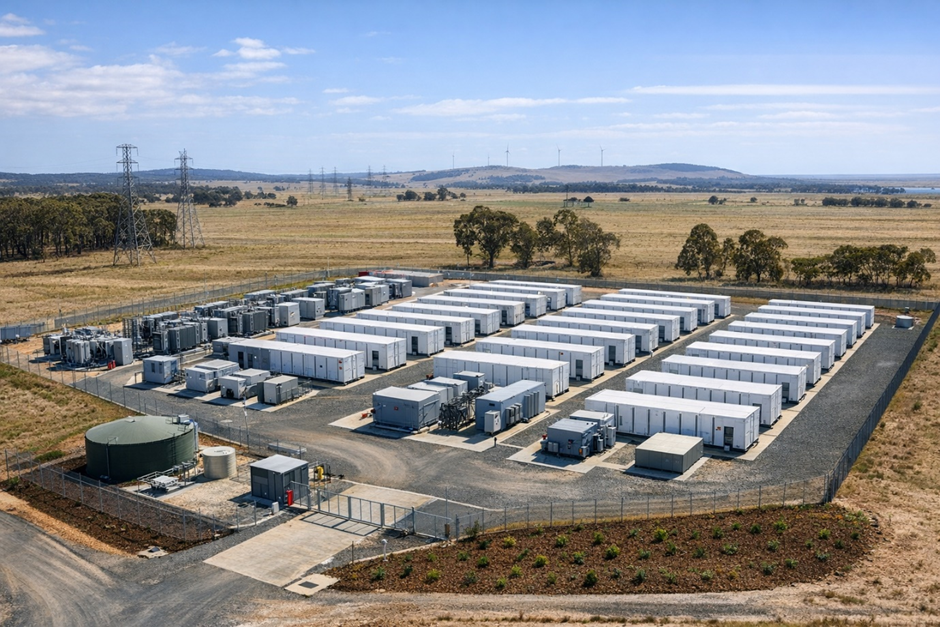
Before detailed engineering begins, a civil engineer must assemble a comprehensive set of documents that define the boundaries and obligations of the project. Among the most significant is the Principal Project Requirements (PPR), this document functions as an overarching specification and guides all subsequent design choices. Equally important are the technical details of the electrical equipment, including the dimensions and weight of battery enclosures, Medium Voltage Power Stations (MVPS), transformers, switch rooms, and inverters. These details directly influence platform sizes, foundation design, crane access, and pavement design.
Planning-permit conditions issued by local/state government also shape the civil design. These conditions typically address issues such as traffic impacts, bushfire safety, stormwater management, and flood-risk mitigation. In many Australian jurisdictions, planning compliance depends on the project’s ability to demonstrate no adverse effect on neighbouring properties. Flood studies and floodplain assessments therefore play a crucial role by identifying local flood levels, overland flow paths, and hydraulic constraints. This is particularly important for BESS infrastructure, which must be protected against even rare flooding events. The Stormwater Management Plan complements this by ensuring post-development flows do not exceed pre-development conditions and that water quality leaving the site meets environmental standards.
Another early component is the Traffic Impact Assessment (TIA), which identifies construction traffic volumes, operational vehicle movements, turning requirements, and heavy-vehicle access needs. A BESS project typically involves transporting large modular components and heavy transformers, making vehicle assessment essential. These early documents form the foundation upon which the civil engineer begins shaping the site layout, drainage pathways, access roads, and structural foundations.
Planning for Site Access and Vehicle Movements
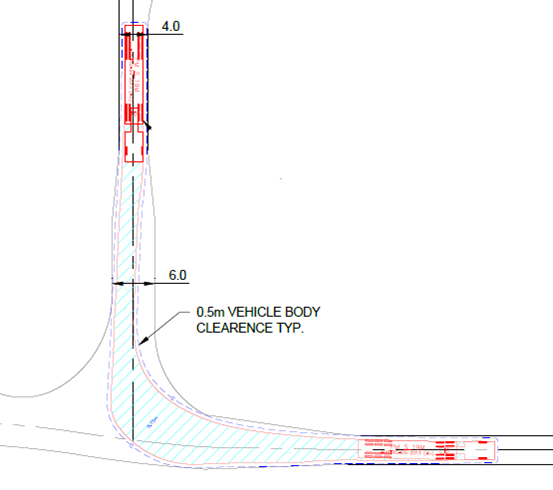
Once the foundational documentation is reviewed, attention shifts to designing safe and functional access routes for all vehicles required during both construction and operational phases. The Traffic Impact Assessment identifies the largest construction vehicles—typically including heavy low loaders transporting battery units and transformers, as well as large mobile cranes—and evaluates their ability to manoeuvre through the site. This assessment considers turning paths, road widths, intersection geometry, gradient constraints, and clearances around the BESS compound to ensure these oversized vehicles can operate safely. In parallel, access provisions for emergency-response vehicles must also be incorporated, with the fire authority requiring specific access widths, turning areas, and unobstructed approach routes to support effective emergency operations.
Swept-path analysis is carried out using specialised modelling software to simulate how large vehicles manoeuvre around corners, bends, intersections, and critical equipment zones. For the main access roads, the analysis typically considers the largest equipment-delivery vehicles, such as heavy low loaders transporting battery units, transformers, and associated infrastructure. Perimeter roads, which are generally narrower and intended primarily for emergency use, must also safely accommodate fire-response vehicles while maintaining clearances around essential site infrastructure. Requirements set by the fire authority, particularly around turning radii and access near fire-water tanks and hydrants, informed the need for a wider access arrangement in certain areas. These design considerations ensure that both heavy equipment-delivery vehicles and emergency vehicles can navigate the site safely and reliably throughout construction and operation.
Establishing Earthworks and Finished Surface Levels
Designing earthworks for a BESS site involves balancing constructability, flood resilience, drainage performance, and cost. Many Australian renewable-energy sites exist on flat or gently undulating terrain, which simplifies construction but introduces unique challenges related to stormwater management. Flat sites are prone to ponding, so even small elevation adjustments can significantly affect drainage outcomes. To ensure proper runoff, the design typically employs a minimum grade—often around 0.5 to 1.0 percent—across access roads, platforms, and general site areas. This subtle slope is enough to promote efficient drainage while maintaining low earthworks volumes.
Flood resilience plays a major role in determining finished ground levels. Using flood mapping results, the BESS platforms must be set above the local 1 percent AEP (100-year ARI) flood level + Free board (300 to 500mm based on the Client’s requirement) to protect sensitive electrical components. In the project referenced, the 100-year flood level was 181.5 metres AHD, so all finished surface levels for battery containers were set above this elevation. During early design, earthworks modelling revealed that significant imported fill would be needed, prompting concerns from the client’s representatives. To reduce cost and environmental impact, the design was revised to improve cut-fill balance by adjusting bench levels and incorporating stripping of topsoil as per geotechnical report guidelines. The refined grading strategy significantly reduced the volume of imported material and produced a more sustainable, cost-effective earthworks solution.
Developing the Site’s Stormwater and Drainage Strategy
Drainage is one of the most critical civil components of a BESS facility, as electrical equipment must remain isolated from moisture and protected from runoff. The process begins by obtaining rainfall intensities from the Bureau of Meteorology, where design intensities for various storm events are provided through the 2016 Design Rainfall Data System. In this case, a 10 percent AEP storm was selected for internal drainage calculations based on project requirements.
Hydrological analysis begins with estimating peak discharge using the Rational Method, which incorporates runoff coefficients tailored to site materials. Impervious surfaces such as rooftops and BESS enclosures receive high coefficients around 1.0 or 0.90, while crushed-rock areas are assigned intermediate values of around 0.7, and swales have lower coefficients. These values reflect how much rainfall will convert to surface flow. Hydraulics then determines the capacity needed to safely convey water through pipes, swales, table drains, and culverts. 12d software was used for design of drainage system. The drainage network is designed to direct flows away from battery platforms, reduce erosion, and limit the risk of ponding.
Fire-water management represents an essential component of the overall drainage strategy, particularly because battery-related fires can produce contaminated runoff containing hazardous materials such as lithium compounds. In accordance with planning-permit requirements, the project includes dedicated fire-water storage tanks for emergency response, and any water used during a fire event must be completely isolated from the standard stormwater network. To accommodate this, a separate fire-water retention system was designed specifically to capture and contain all runoff generated during a battery fire. The fire-water retention pond was sized to hold the full volume from the fire-water tanks, together with a 0.3-metre freeboard to ensure safe containment under all operating conditions. The pond is connected to the site’s drainage system through a controlled valve arrangement that can operate electronically or manually, enabling operators to divert fire-water to the dedicated retention system and direct clean rainwater to the stormwater-detention system as required.
In parallel, a larger stormwater-detention system was developed to manage peak rainfall events and regulate runoff in accordance with hydraulic and environmental requirements. The detention basin incorporates both low-flow and high-flow orifices to allow controlled discharge rates, and the outlet is designed to connect to the legal point of discharge. For rainfall events that exceed design capacity, an overflow weir safely conveys surplus water over a rock-beached spillway, minimising erosion and protecting downstream environments. Together, these systems ensure the site can effectively manage both contaminated fire-water and uncontaminated stormwater without increasing flood risk or causing adverse impacts beyond the site boundary.
Both the fire-water retention pond and the stormwater-detention basin were fully fenced to enhance safety, restrict unauthorised access, and meet public-safety requirements.
Incorporating Flood Protection and Overland Flow Management
Because flooding poses one of the greatest threats to BESS equipment, additional measures beyond elevation control were incorporated into the design. A windrow was placed along the edge of the site to divert external overland flows, ensuring water does not traverse the BESS platforms during major storms. This simple but effective earth berm helps maintain the natural flow behaviour of the landscape while safeguarding the battery infrastructure. Flood planning also requires the site’s grading and drainage arrangements to achieve a “no worsening” outcome, meaning the project must not increase flood depth, flow velocity, or flood extent on neighbouring lands. Achieving compliance often requires multiple design iterations, hydrological models, and consultation with floodplain authorities.
Designing Pavements for Heavy Construction and Maintenance Traffic
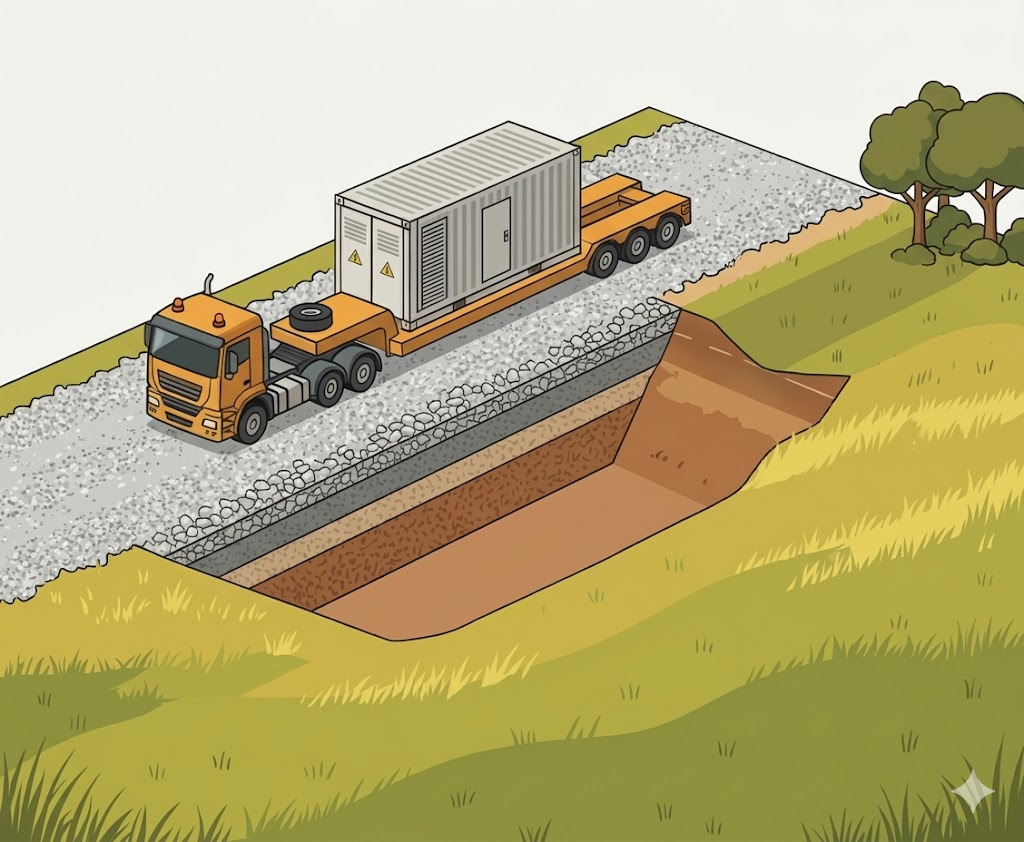
Pavement design for a Battery Energy Storage System (BESS) site is primarily dictated by both construction and operational traffic. During the construction phase, heavy vehicles—including cranes, concrete mixers, and semi-trailers—exert significant structural loads on access roads and hardstands. Consequently, the pavements were designed in accordance with the Austroads Guide to Pavement Technology (specifically for unsealed roads). Engineers calculated Equivalent Standard Axle (ESA) loadings based on projected fleet movements to determine required thicknesses. Weak subgrade soils, particularly those with a California Bearing Ratio (CBR) of less than 3%, required stabilization or the application of structural fill layers to ensure stability. Furthermore, sandy surfaces identified on-site presented erosion risks; these areas were strengthened or protected with geofabrics and capping materials. The resulting pavement structure typically features a crushed-rock base layer over a granular sub-base, supplemented by a sacrificial wearing course to accommodate surface degradation over the facility’s service life. This robust design ensures that access roads remain functional from initial construction through the operational period.
Arranging Car Parking and General Access Facilities
Car-parking design, although less prominent than earthworks or drainage, remains essential for satisfying planning-permit conditions and ensuring smooth construction logistics. For the project under consideration, the Traffic Impact Assessment determined that ten parking spaces were necessary during the construction phase. These spaces were arranged as angled bays measuring 2.4 metres in width and 5.4 metres in length, consistent with AS/NZS 2890.1 standards. A 6.2-metre aisle provided adequate circulation for light vehicles, while additional widening at the ends of parking rows improved manoeuvrability. During the operational stage, only minimal parking capacity is typically needed, but ensuring its availability maintains safe and efficient access for maintenance personnel.
Providing Security and Perimeter Fencing
Security and safety infrastructure represent another critical aspect of the civil design. Given the high value and sensitivity of BESS electrical equipment, the entire battery compound is enclosed by security fencing. In line with project requirements, a 2.1-metre chain-wire mesh fence topped with three strands of barbed wire surrounds the BESS area. This combination deters unauthorised access and aligns with industry standards for critical-infrastructure protection. Stormwater and fire-water ponds also require fencing, typically to a height of 1.8 metres, to ensure public safety and prevent accidental entry by people or animals. Fence alignments must be coordinated with drainage channels, cable routes, gates, and access paths to avoid conflicting with underground services or obstructing emergency egress.
Integrating Civil Design with Construction Staging and Sequencing
As the project progresses toward construction, civil engineers must plan for temporary works, staging requirements, and logistics. Construction of a BESS often involves complex sequences, including delivery of prefabricated battery enclosures, transformer installation, and large crane operations. These activities require stable ground surfaces, properly compacted laydown areas, and safe access for heavy machinery. Temporary drainage measures—such as silt fences, sediment basins, and stabilised access points—must be installed early to prevent erosion during earthworks.
Applying Geotechnical Insights to Foundations and Earthworks
Geotechnical investigation underpins every major civil-engineering decision on a BESS site. Boreholes, test pits, and CBR testing reveal soil characteristics that influence foundation design, settlement behaviour, drainage capacity, and pavement durability. BESS containers may rest on reinforced concrete pads or piles depending on soil strength and equipment loads. Transformers, which contain significant oil volumes, often require reinforced slabs and containment bunds designed to capture potential spills. Groundwater conditions must also be evaluated, particularly in areas susceptible to prolonged saturation. Engineers should understand that geotechnical data must be interpreted holistically, as soil behaviour affects not only foundations but also drainage, erosion potential, and earthworks efficiency.
Ensuring Environmental Compliance and Sustainable Site Development
Environmental protection plays an important role throughout all stages of a BESS project. Erosion and sediment control measures must be implemented during construction to protect waterways and surrounding ecosystems. These include silt fencing, sediment traps, and stabilised construction entrances. Sustainable practices can be incorporated by reusing site-won materials, minimising imported fill, and selecting recycled crushed-rock products where practical. Landscaping plans often include native vegetation that supports biodiversity and enhances visual integration with the surrounding landscape. Environmental requirements continue into the operational stage, where drainage assets must be maintained, swales must be kept free of sediment, and vegetation buffer zones must remain effective.
Understanding Common Design Challenges and Lessons Learned
Across multiple BESS developments, several recurring challenges provide important lessons for civil engineers. One frequent issue is the underestimation of flood impacts on flat sites. Without careful grading, even minor rainfall can cause ponding beneath electrical equipment. Another challenge is the under-design of pavements when construction traffic is not fully accounted for. The loads imposed by cranes and heavy delivery vehicles often exceed those of normal operations by a significant margin. Earthworks calculations also require careful attention, as overlooking topsoil stripping or local depressions can lead to significant discrepancies in cut-fill volumes. Finally, where there is no legal point of discharge, stormwater strategies must be developed early—including pumping systems and erosion-resistant level spreaders—to ensure planning approval is not delayed.
Conclusion: The Role of Civil Engineering in Australia’s Energy Transition
The civil-engineering design of a Battery Energy Storage System in Australia is a complex and multifaceted task that integrates earthworks, drainage, access, flood mitigation, pavements, environmental protection, and security into a unified and resilient infrastructure framework. Engineers entering the renewable-energy sector will find BESS projects particularly rewarding, as they provide exposure to a broad spectrum of engineering disciplines—from hydrology and geotechnical analysis to road design and construction management. By understanding the reasoning behind each design decision and the interconnected nature of civil components, engineers can help deliver reliable, safe, and cost-effective energy-storage systems that support Australia’s transition toward a sustainable energy future.